
From 12 to 18 October 2026, the Paris Motor Show returns to Paris Expo Porte de Versailles for its 91st edition. A major event in the automotive industry, the show gives the public the opportunity to discover the latest models from carmakers, test selected vehicles and explore the latest innovations. But what are the key trends shaping the future of mobility?
Planning Your Visit: Dates, Opening Hours, Tickets and More
The 2026 Paris Motor Show will take place at Paris Expo Porte de Versailles from Tuesday 13 October to Sunday 18 October for the general public. Monday 12 October is reserved for accredited press.
Opening hours are 9:30 am to 8 pm from Tuesday to Thursday, until 10 pm on Friday and Saturday for the evening sessions, and from 9 am to 6:30 pm on Sunday.
Tickets are available online. Admission costs €20 on weekdays, €22 at weekends and €17 for evening sessions. Children aged 7 to 17 and students benefit from a reduced rate of €13. Tickets can also be purchased at the venue, although prices are higher.
The show is organised into five areas and brings together more than 100 exhibitors and over 60 carmakers.
Get ready! The programme includes new car launches, electric vehicles, technology demonstrations, test drives, conferences and panel discussions.
Test drives? Yes, you read that right! The Test Drive Centre offers more than 5,000 slots, allowing visitors to try out 90 vehicles from 19 brands.
The show will also focus on topics such as artificial intelligence, software-defined vehicles, autonomous driving and affordable mobility.
Facing New Competitors: Price Remains a Key Factor
Although the Paris Motor Show has traditionally been associated with the excitement and aspiration surrounding cars, consumers are increasingly focused on the financial realities of buying one. Purchasing a car represents a significant investment and, with fuel prices rising, the purchase price remains an important consideration.
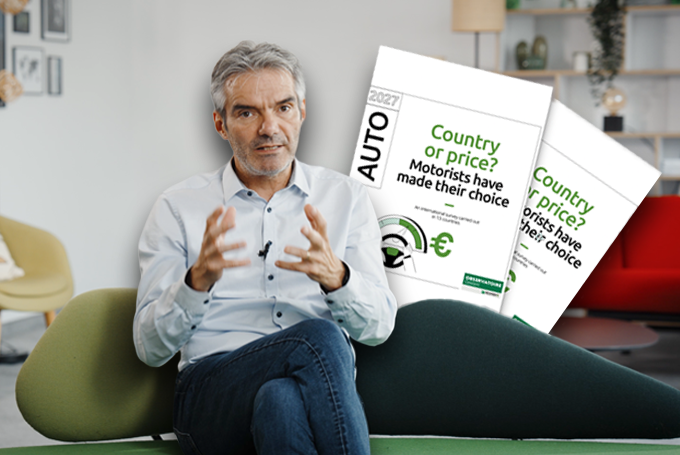
This is one of the key findings of the latest Cetelem Observatory Automotive Report, Home Country or Price? Drivers Have Made Their Choice. Across the 13 countries surveyed, 90% of motorists consider a brand’s price positioning an important factor. It ranks well ahead of other criteria associated with car brands.
Price sensitivity was already particularly evident in the 2026 edition of the Cetelem Observatory report: nine out of ten respondents felt that new cars were too expensive, including 95% of those surveyed in France.
The Paris Motor Show therefore takes place in a market where carmakers face a dual challenge: continuing to inspire consumers with new models while meeting growing demand for affordability.
Electric Cars Are Gaining Ground, but the Transition Takes Time
Another major focus of the show is electrification.
The latest data from the Cetelem Observatory show that electric cars are gaining ground rapidly in the new-car market. In France, 37,412 fully electric cars were registered in May 2026, accounting for 29% of all new vehicle registrations that month. Over the first five months of the year, electric car registrations increased by 55% compared with the same period in 2025.
However, this acceleration does not mean that the French or European car fleet is already largely electric. In Europe, electric vehicles accounted for just 2.3% of the 255 million cars on the road at the beginning of 2026, compared with 17.4% of new vehicle sales in 2025.
The contrast is clear: the transition is already visible in sales figures, but it will take time for this shift to be reflected across the vehicles on the road.
At the Paris Motor Show, this transformation will be particularly evident in the growing number of electric models and innovations in charging, batteries and everyday vehicle use.
Technology Is Changing the Way We Drive
Cars are no longer defined by their engines alone. They are increasingly connected and, above all, intelligent.
This evolution will be particularly visible at the 2026 Paris Motor Show, where several conferences will focus on artificial intelligence, software-defined vehicles and autonomous driving.
Cetelem Observatory data show that motorists are already paying attention to these technological developments: 71% consider a brand’s technological capabilities important, particularly when it comes to electric vehicles, while 66% value a brand’s innovative approach.
Artificial intelligence is also beginning to play a direct role in the car-buying journey. Nearly four in ten motorists say they have used AI to research, compare or choose a car brand. In France, the figure stands at 31%. Among younger people, it rises to six in ten.
AI is therefore transforming not only cars themselves, but also the way consumers choose their next vehicle
Chinese Carmakers Are Gaining Ground at the Paris Motor Show
The show will also provide an opportunity to observe the growing presence of new players, particularly Chinese manufacturers, alongside established carmakers.
This competitive landscape echoes another finding from the 2027 Cetelem Observatory report: a brand’s country of origin still matters, but it is no longer enough on its own to determine purchasing decisions.
In France, 48% of respondents say they prefer, or would prefer, to buy a brand from their own country. However, when a foreign brand offers a more innovative car, French consumers remain divided: 56% would still choose the less innovative domestic vehicle, while 44% would opt for the more innovative foreign model.
Above all, price quickly comes back into the equation. Across the 13 countries surveyed, it is the leading criterion associated with a car brand.
The Paris Motor Show will reflect a market facing two broad challenges. Established brands must preserve their identity and appeal, while newer manufacturers, particularly from Asia, compete with highly competitive pricing.
The Paris Motor Show Highlights an Automotive Market in Transition
The Paris Motor Show offers a glimpse into the developments shaping the cars of today and tomorrow. Electrification, new technologies, emerging manufacturers and changing prices are all influencing motorists’ expectations and purchasing decisions.
To explore these trends in greater depth and gain a better understanding of the changing automotive market, discover the latest analysis from the Cetelem Observatory Automotive Report and follow the latest updates from this year’s Paris Motor Show.
FAQ: Everything You Need to Know About the 2026 Paris Motor Show
When is the 2026 Paris Motor Show?
The Paris Motor Show takes place in Paris from 13 to 18 October 2026, with 12 October reserved for the press.
Where is the 2026 Paris Motor Show held?
The show takes place at Paris Expo Porte de Versailles in the 15th arrondissement of Paris.
What are the opening hours of the 2026 Paris Motor Show?
The show is open from 9:30 am to 8 pm Tuesday to Thursday, until 10 pm on Friday and Saturday, and from 9 am to 6:30 pm on Sunday.
How much does a ticket for the 2026 Paris Motor Show cost?
Admission costs €20 on weekdays, €22 at weekends and €17 for evening sessions, with a reduced rate of €13 for students and children aged 7 to 17.
What can you see at the 2026 Paris Motor Show?
Visitors can discover new car models, electric vehicles, technological innovations, conferences and test drives.
What are the main automotive trends in 2026?
Electrification, artificial intelligence, new technologies and the arrival of new manufacturers, particularly from China, are among the key trends highlighted at the show.
What role do electric cars play in 2026?
In France, electric cars accounted for 29% of new vehicle registrations in May 2026, but represented just 2.3% of the European car fleet at the beginning of 2026.
What does the Cetelem Observatory report reveal about motorists?
Its latest study shows that price remains a key factor, considered important by 90% of motorists surveyed across 13 countries.
Key Takeaways
The 2026 Paris Motor Show highlights a mobility sector undergoing major changes, driven by electrification, new technologies and the arrival of new manufacturers.
These developments reflect the trends identified by the Cetelem Observatory, particularly regarding price, innovation and the changing criteria motorists use when choosing a car.