Economic uncertainty: why do households postpone purchases rather than give them up?
The start of the 2025 season in France was marked by two forms of uncertainty: political uncertainty and budget uncertainty.
Economics has a well-documented explanation for what happens in such situations.
Research consistently shows that uncertainty generates wait-and-see behaviour.
Households and businesses adopt a precautionary approach and delay decisions that are expensive, difficult to reverse or involve long-term commitments.
But there is another important factor.
French households can postpone many purchases because they are already highly equipped with durable goods.
How does this mechanism work? Why are some markets affected more than others? And what do previous economic shocks suggest about what happens when confidence returns?
Key takeaways
– uncertainty generates wait-and-see behaviour among economic actors
– households and businesses adopt a precautionary approach to investment and major projects
– households often postpone purchases rather than abandon them altogether
– high ownership levels of durable goods make those delays possible
– during previous shocks, households and businesses have shown a strong capacity to adapt, helping the economy remain resilient
How uncertainty turns into wait-and-see behaviour
The mechanism is relatively simple and widely documented in economic research.
When the future becomes difficult to read, households and businesses tend to focus less on optimising decisions and more on preserving their options.
Waiting is often relatively inexpensive.
Making the wrong decision can be costly.
Postponement therefore becomes a rational strategy.
This behaviour primarily affects purchases and investments that are both significant and deferrable.
For a business, that may mean delaying an investment.
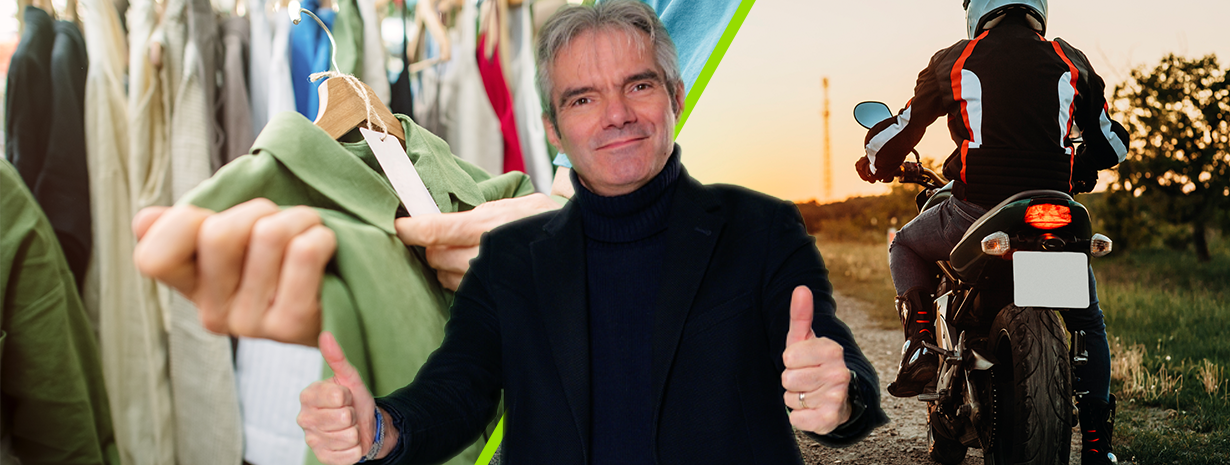
For a household, it may mean postponing the purchase of a car, furniture or a major appliance.
Everyday spending is much less affected.
This is why uncertainty does not necessarily create a collapse in total consumption.
Instead, it often creates a shift in timing.
Demand has not disappeared.
It has been postponed.
Why high ownership levels make postponement possible
This is a particularly important part of the analysis.
Wait-and-see behaviour is not purely psychological.
It also requires a material condition: households need to be able to continue using something they already own.
A household can postpone replacing a car because it already has one.
It can delay buying a new sofa because the existing sofa still works.
France is a mature consumer market where household ownership of many durable goods is already very high.
That maturity is often seen as a structural limitation on further consumption growth.
But in periods of uncertainty, it has another consequence:
it makes postponement relatively painless.
As a result, markets based primarily on replacement cycles are often the first to weaken:
– automotive;
– furniture;
– household appliances;
– home equipment.
These purchases are highly deferrable.
The same effect can be seen in Europe’s car fleet, where the average vehicle is now around 12.5 years old.
Which types of spending are less affected by uncertainty?
The other side of the argument is equally revealing.
If uncertainty hits durable goods because their replacement can be delayed, then spending that cannot be stored or postponed in the same way behaves differently.
A concert, a festival, a restaurant meal or another leisure experience has a time dimension.
If consumers decide not to attend today, the opportunity may simply disappear.
These forms of spending therefore offer less scope for waiting.
This helps explain an apparent contradiction observed repeatedly in household behaviour:
even when consumers are delaying major purchases, spending on leisure, culture and experiences can remain comparatively resilient.
Cetelem Observatory research has documented this resilience over several decades.
Households are not necessarily consuming less across the board.
They are changing what they postpone.
Durable goods can wait.
Experiences are harder to defer.
👉 Read also: the economic importance of culture in France
What previous economic shocks tell us
One important distinction needs to be made:
wait-and-see behaviour is not the same as economic collapse.
Recent years have brought several major shocks and periods of uncertainty.
In each case, households and businesses demonstrated significant adaptability, helping the economy absorb some of the impact.
This suggests two different time horizons.
In the short term
Uncertainty weighs directly on replacement markets.
Postponement becomes one of the main ways households adjust their spending.
In the medium term
Postponed demand can become a reserve of future consumption.
An ageing car eventually needs replacing.
A worn household appliance eventually fails.
Furniture eventually needs renewing.
Delaying these purchases therefore creates an accumulation of future needs that can be released once households regain greater visibility.
The key question is therefore not necessarily whether these purchases will return, but when.
FAQ – Economic uncertainty and purchasing behaviour
Why does economic uncertainty reduce household spending?
Uncertainty encourages wait-and-see behaviour. When the future is
difficult to predict, households and businesses adopt a precautionary
approach and delay major decisions because waiting can be less costly
than making the wrong choice.
Do households cancel purchases or simply postpone them?
Many major purchases are postponed rather than permanently cancelled.
Demand therefore shifts into the future and can reappear when households
regain confidence and visibility.
Why can French households postpone so many purchases?
Because ownership levels for durable goods are already high. A household
can postpone replacing a car, sofa or appliance if it already owns one
that still works.
Which markets are most affected by wait-and-see behaviour?
Replacement markets for durable goods are particularly exposed,
including automotive, furniture, household appliances and other
home equipment.
Does uncertainty affect all forms of spending equally?
No. Experiences such as cultural events, leisure activities or
restaurant visits are harder to postpone because the opportunity itself
may disappear. These categories can therefore prove more resilient than
durable-goods purchases.
Why does economic uncertainty reduce household spending?
Uncertainty encourages wait-and-see behaviour. When the future is difficult to predict, households and businesses adopt a precautionary approach and delay major decisions because waiting can be less costly than making the wrong choice.
Do households cancel purchases or simply postpone them?
Many major purchases are postponed rather than permanently cancelled. Demand therefore shifts into the future and can reappear when households regain confidence and visibility.
Why can French households postpone so many purchases?
Because ownership levels for durable goods are already high. A household can postpone replacing a car, sofa or appliance if it already owns one that still works.
Which markets are most affected by wait-and-see behaviour?
Replacement markets for durable goods are particularly exposed, including automotive, furniture, household appliances and other home equipment.
Does uncertainty affect all forms of spending equally?
No. Experiences such as cultural events, leisure activities or restaurant visits are harder to postpone because the opportunity itself may disappear. These categories can therefore prove more resilient than durable-goods purchases.
Key takeaways
Political and budget uncertainty generate a well-documented economic response: wait-and-see behaviour.
Households and businesses apply a precautionary approach and postpone major purchases and investments.
In France, this behaviour is made easier by the already high level of household ownership of durable goods.
Consumers can delay replacing a car, sofa or household appliance without immediately going without the product.
Replacement markets are therefore among the first to weaken.
By contrast, leisure and cultural spending can prove more resilient because experiences cannot be postponed in exactly the same way.
Recent shocks also suggest an important nuance: postponed demand does not necessarily disappear.
It can become a reserve of future consumption, ready to return when economic visibility improves.
👉 Discover the Cetelem Observatory Consumption 2025 study
👉 Read also: the global automotive market in 2025
👉 Back to the September 2025 Mobility & Consumption Minute on BNP Paribas Personal Finance