
Feeling good at home


 1 min
reading time
1 min
reading time
INDEPENDENT, FIRST AND FOREMOST
To enjoy a healthy life, there’s nothing like living at home for as long as possible. 83% of seniors said they were attached to this aim, compared with 65% of Europeans on average. This score is significantly higher than the figure for under-60s (60%).
This strong attachment to “home sweet home” was particularly marked in the countries of “old Europe”, led by France, Germany and Italy (71%, 69% and 69%). This desire was much more measured in Sweden, the only country where living independently at home was below average (47%).
Fig 18 – Housing preferences in case of loss of autonomy
Download this infographic for your presentations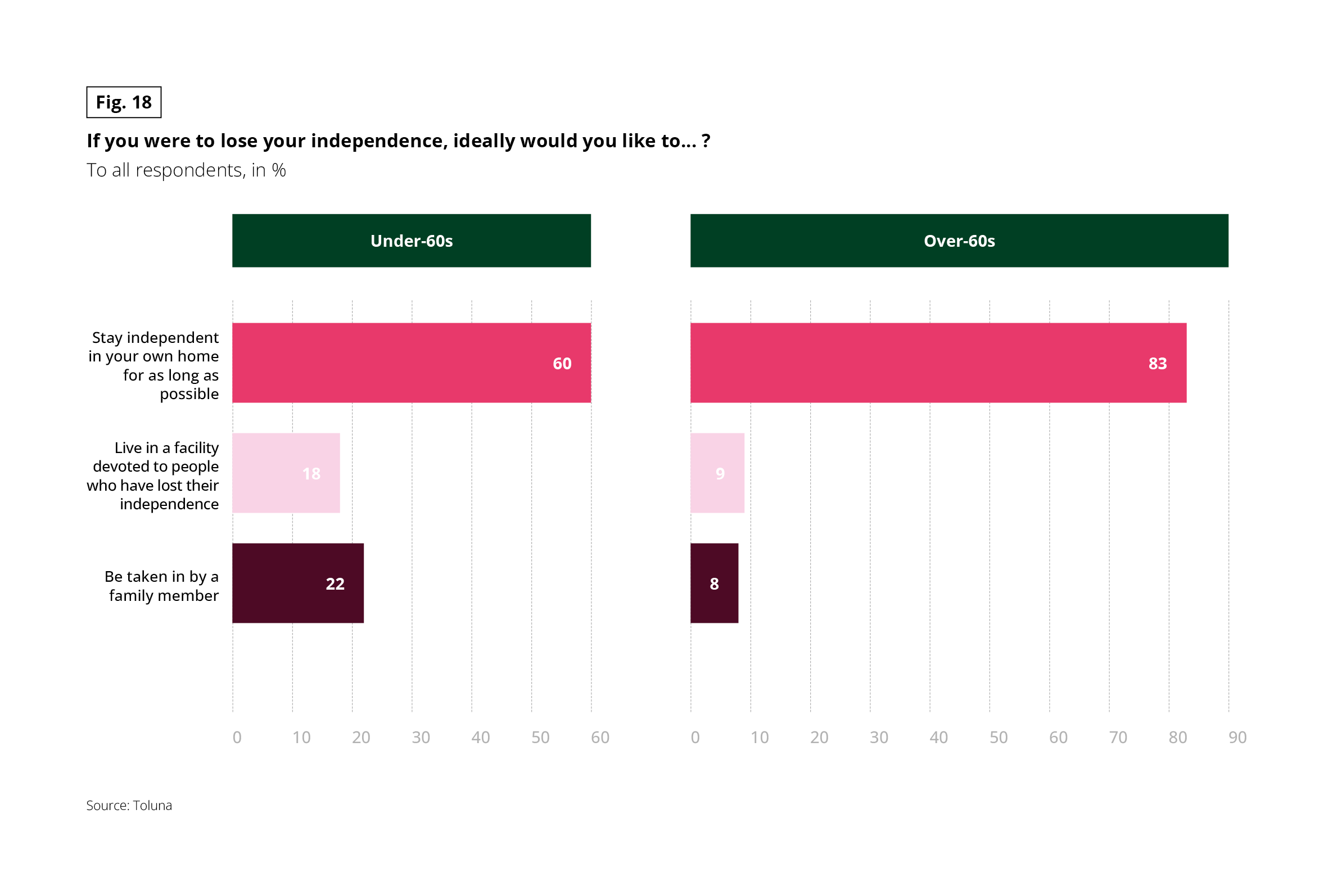 This infographic presents the housing preferences in case of loss of autonomy, expressed as a percentage, according to two age groups: under 60 and 60 and over.
Under 60: Stay autonomous at home as long as possible: 60% Be hosted by a loved one: 22% Live in a dedicated structure for people with loss of autonomy: 18%
60 and over: Stay autonomous at home as long as possible: 83% Live in a dedicated structure: 9% Be hosted by a loved one: 8%
The main finding is that, in both age groups, staying at home is the most cited option, with a higher level among people 60 and over.
Source: Toluna.
This infographic presents the housing preferences in case of loss of autonomy, expressed as a percentage, according to two age groups: under 60 and 60 and over.
Under 60: Stay autonomous at home as long as possible: 60% Be hosted by a loved one: 22% Live in a dedicated structure for people with loss of autonomy: 18%
60 and over: Stay autonomous at home as long as possible: 83% Live in a dedicated structure: 9% Be hosted by a loved one: 8%
The main finding is that, in both age groups, staying at home is the most cited option, with a higher level among people 60 and over.
Source: Toluna.
IMPROVING THE LIVING ENVIRONMENT
Living independently in one’s own home is only conceivable in a quality living environment. In fact, of all the measures that could improve the situation, 1 in 2 senior citizens favoured adapting the homes of the elderly to make their lives easier and more pleasant.
This was a priority for half of them, mainly in France, the UK and Spain. This was also the main concern for the under-60s, although scores were lower.
Fig 19 – Housing priorities in response to demographic aging
Download this infographic for your presentations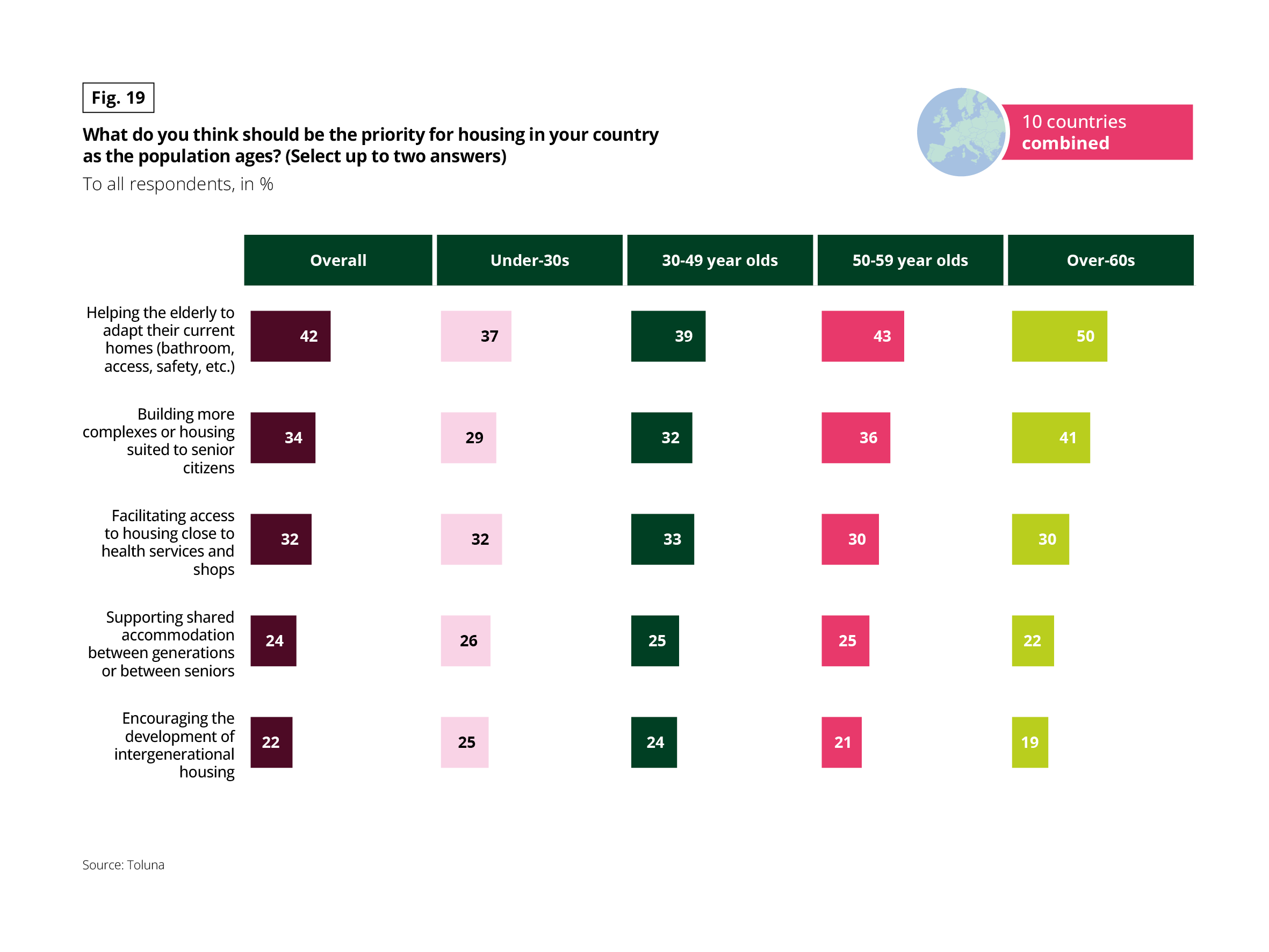 This infographic shows the declared housing priorities in response to population aging. Two responses were possible. The results are expressed as a percentage for the entire sample and by age group.
Helping older people adapt their current housing: Overall: 42% Under 30: 37% 30-49: 39% 50-59: 43% 60 and over: 50%
Building more residences or housing adapted for seniors: Overall: 34% Under 30: 29% 30-49: 32% 50-59: 36% 60 and over: 41%
Facilitating access to housing close to health services and shops: Overall: 32% Under 30: 32% 30-49: 33% 50-59: 30% 60 and over: 30%
Supporting intergenerational cohabitation or between seniors: Overall: 24% Under 30: 26% 30-49: 25% 50-59: 25% 60 and over: 22%
Encouraging the development of intergenerational housing: Overall: 22% Under 30: 25% 30-49: 24% 50-59: 21% 60 and over: 19%
The top priority cited in all groups concerns adapting existing housing.
Source: Toluna.
This infographic shows the declared housing priorities in response to population aging. Two responses were possible. The results are expressed as a percentage for the entire sample and by age group.
Helping older people adapt their current housing: Overall: 42% Under 30: 37% 30-49: 39% 50-59: 43% 60 and over: 50%
Building more residences or housing adapted for seniors: Overall: 34% Under 30: 29% 30-49: 32% 50-59: 36% 60 and over: 41%
Facilitating access to housing close to health services and shops: Overall: 32% Under 30: 32% 30-49: 33% 50-59: 30% 60 and over: 30%
Supporting intergenerational cohabitation or between seniors: Overall: 24% Under 30: 26% 30-49: 25% 50-59: 25% 60 and over: 22%
Encouraging the development of intergenerational housing: Overall: 22% Under 30: 25% 30-49: 24% 50-59: 21% 60 and over: 19%
The top priority cited in all groups concerns adapting existing housing.
Source: Toluna.